
What Is Doming? How 3D Stickers Are Made
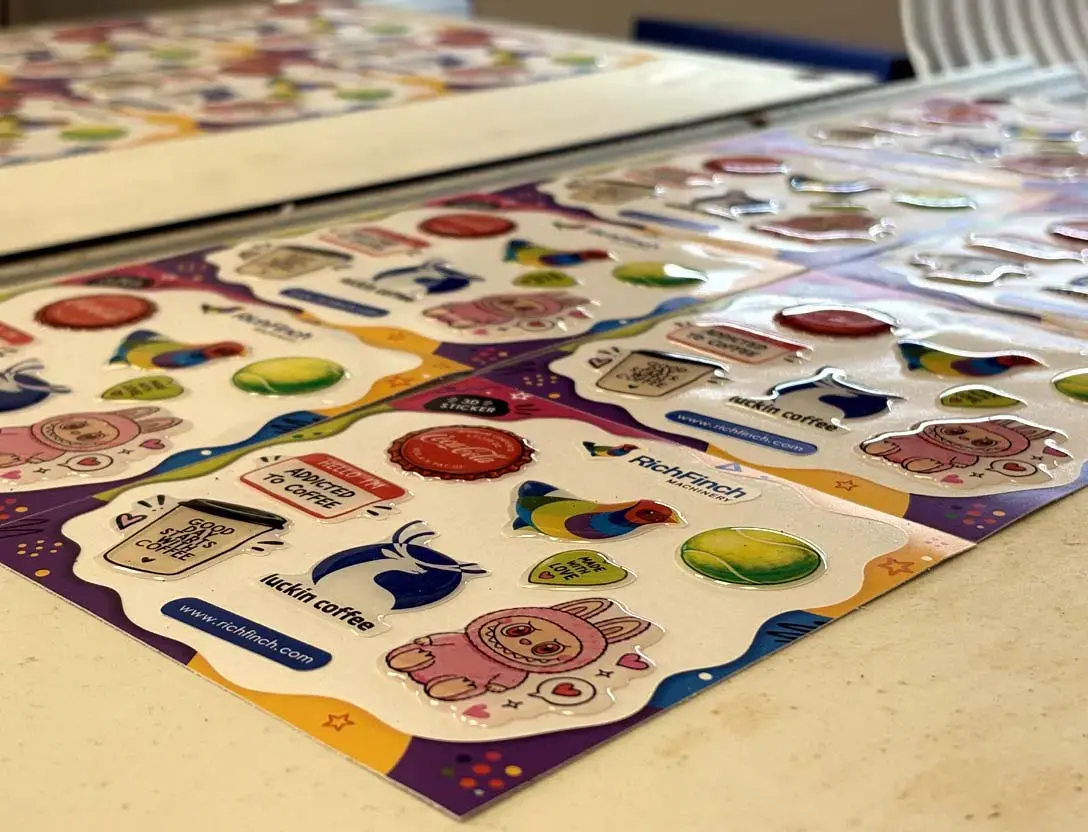
Doming is a finishing process that covers a printed sticker or label with a clear layer of polyurethane resin. The resin spreads across the surface and cures into a transparent convex dome, giving the product depth, gloss and a solid tactile feel while protecting the printed image underneath.
Products made this way go by several names – 3D stickers, resin stickers, gel stickers, domed labels, domed decals. They describe the same finish, and they are made the same way: with a doming machine.
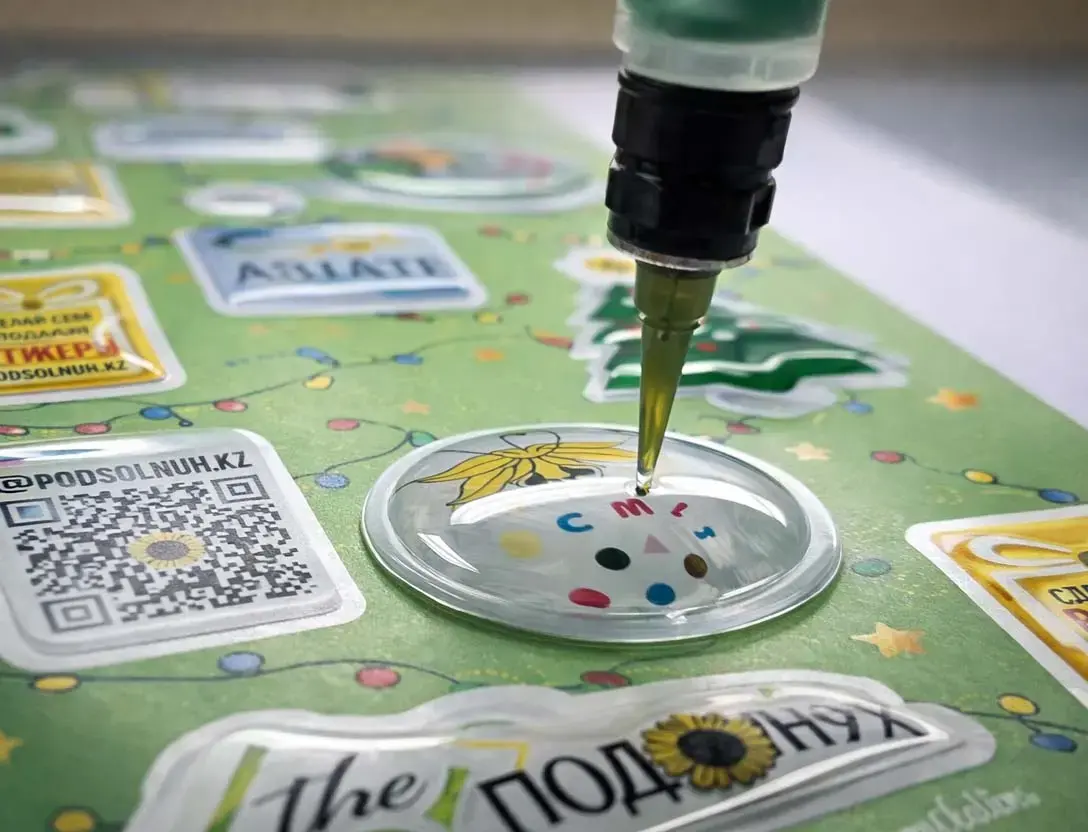
How Domed Stickers Are Made
Four steps, and only one of them is doming itself. The first two happen on equipment most print businesses already own.
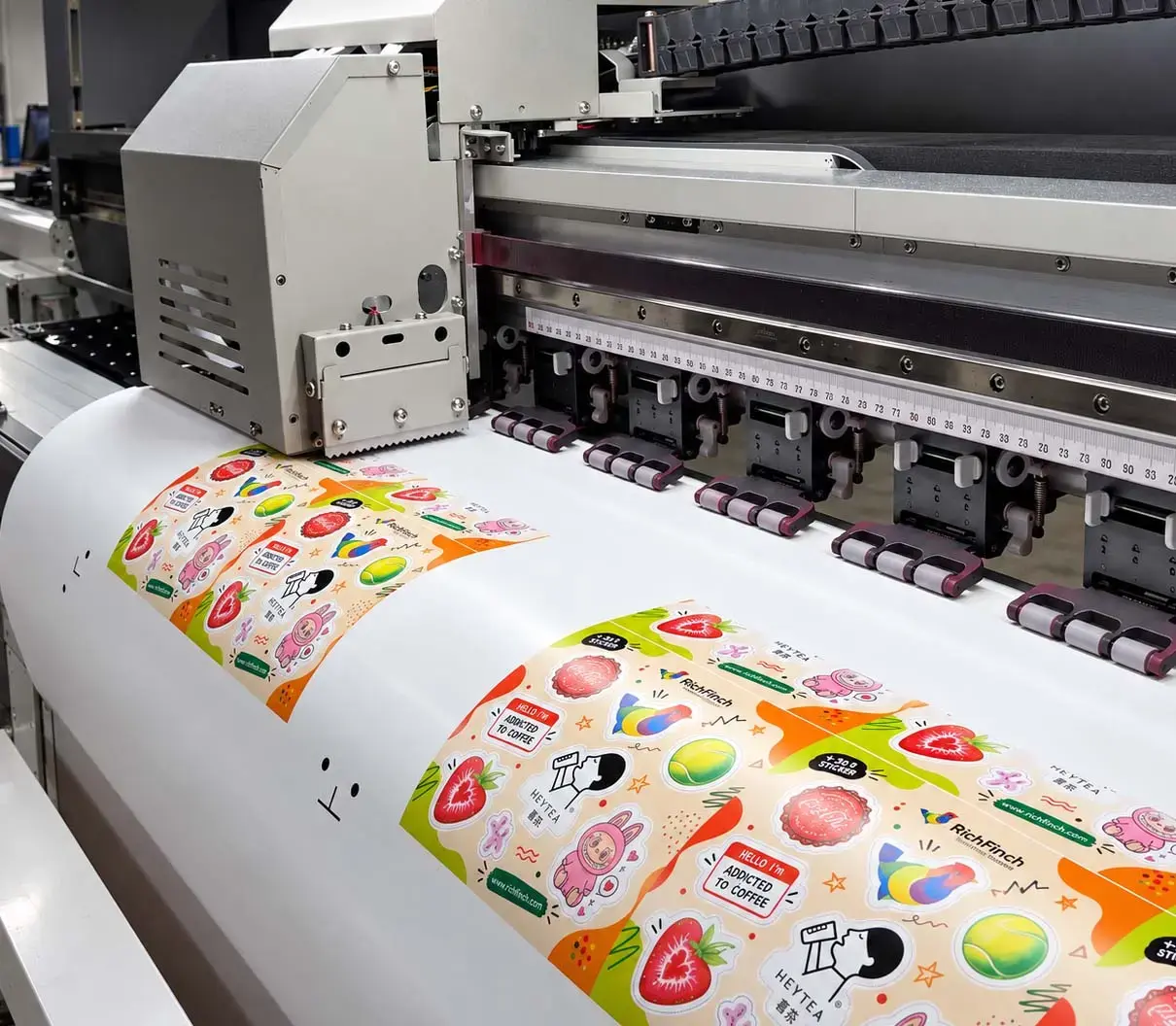
Print
The design is printed onto self-adhesive sheet material on a standard printer. Nothing about the artwork changes for doming – the same file that would produce a flat sticker produces a domed one.
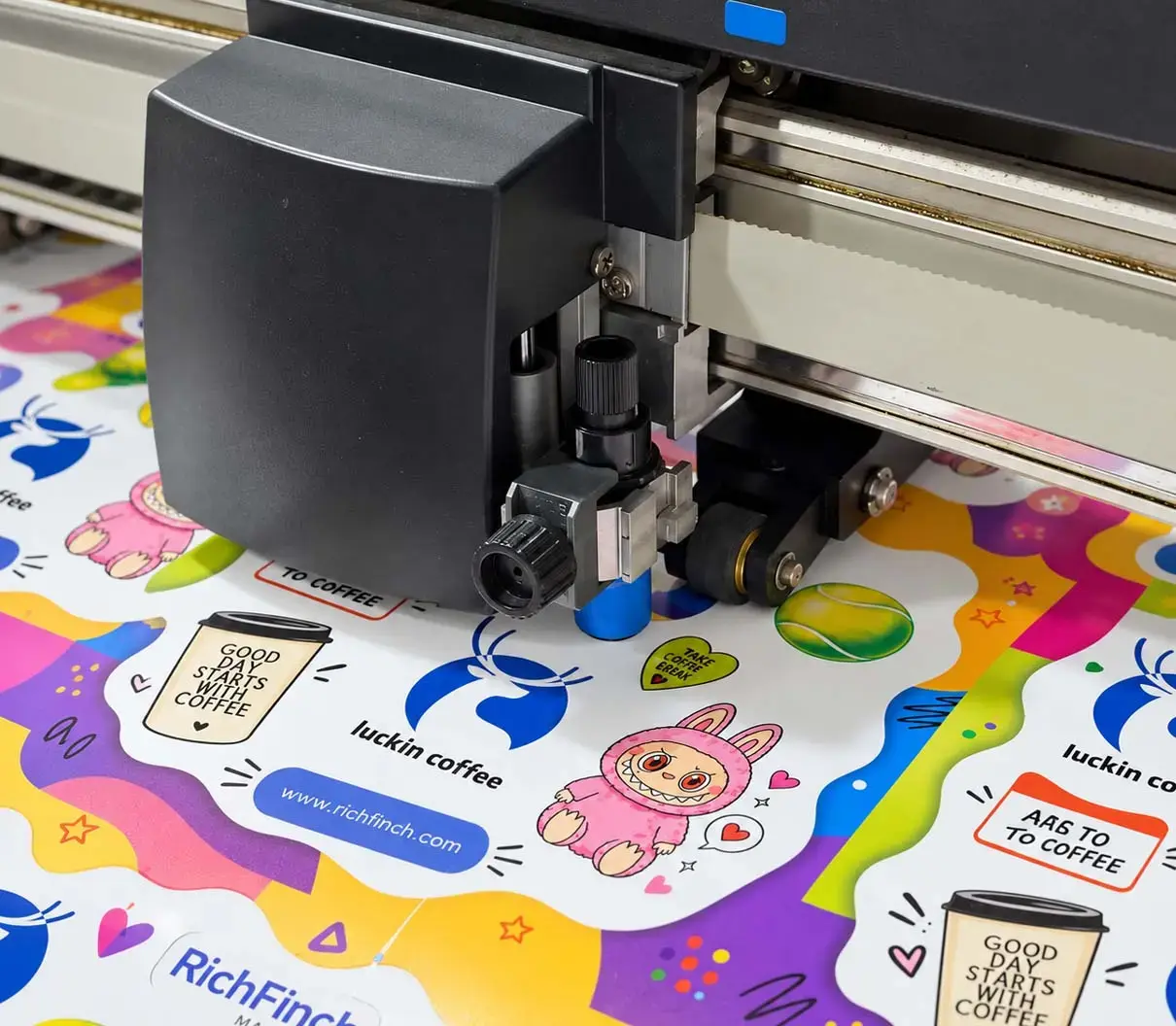
Contour cut
The printed sheet goes to a cutting plotter, which cuts each shape along its outline while leaving the backing intact. The cut edge matters: it is what holds the resin in place in the next step.
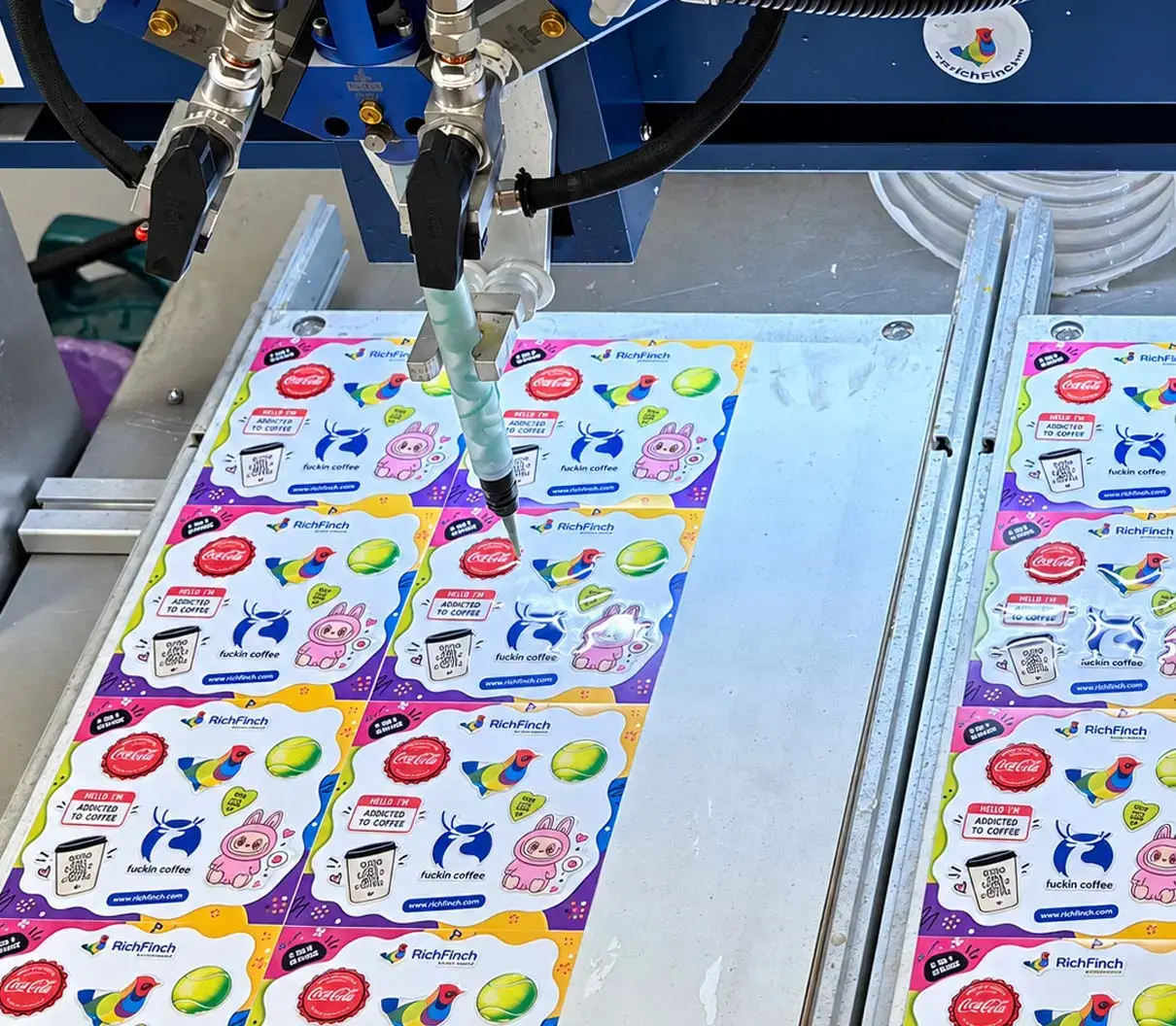
Dispense the resin
Two-component polyurethane resin is mixed and applied to each shape on the sheet. Surface tension pulls the resin into a dome and holds it at the cut edge instead of letting it run over. Dose accuracy decides the shape of the dome – too little leaves a flat edge, too much overflows.
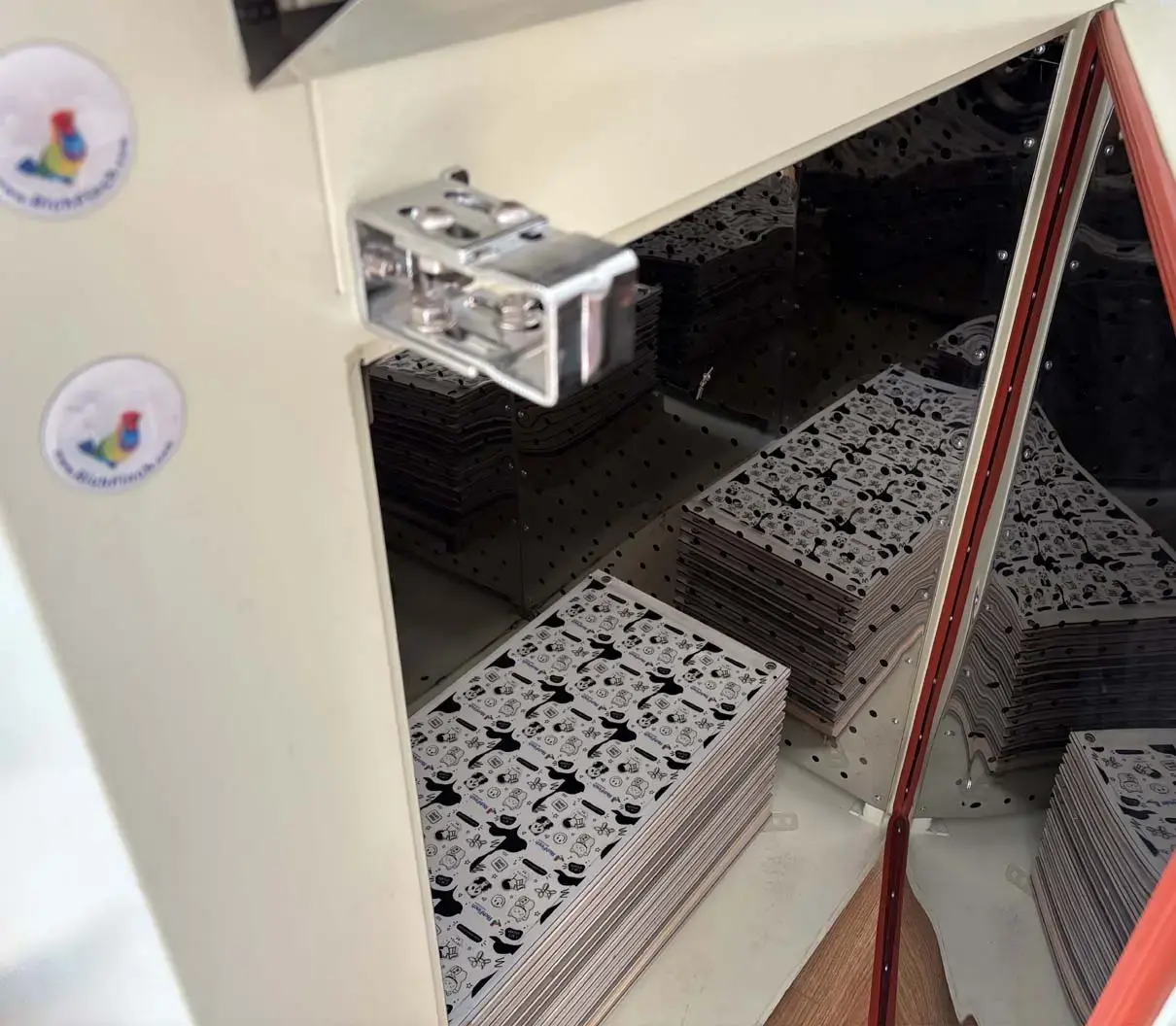
Cure
The sheets go into a heated curing oven, where the resin levels out and hardens into a clear, solid dome. Once cured, the sheet is a finished product: stickers on a backing, ready to peel.
The Doming Process on Video
A full production sheet, from flat printed stickers to finished 3D domes.
What Doming Is Made Of
Two materials decide how the finished product looks and how long it lasts: what you print on, and what you dome with.
- The resin
- Doming uses two-component polyurethane resin – a liquid that is mixed immediately before use and cures into a clear solid. It is self-levelling, which is why the dome comes out smooth without polishing, and it stays optically clear so the print reads through it without a colour cast. The cured layer helps protect the print from moisture, abrasion and UV exposure.
- The printed material
- Doming is applied to printed self-adhesive sheets – normally vinyl. The process is sheet-based from start to finish: the sheet is printed, cut, domed and cured as one piece, and only separated when the end customer peels a sticker off the backing.
Doming vs 3D UV Printing (UV DTF)
These two show up in the same search results and produce very different products.
3D UV printing, often sold as UV DTF, builds a raised texture out of ink and varnish. The printer lays down layers that you can feel with a fingertip, then the image transfers onto the target surface. The result is a thin textured graphic bonded to the object.
Doming adds a separate material on top of the print: a thick, clear resin dome. The dome works like a lens – it magnifies the artwork slightly and catches light along its curve, which is what gives domed products their depth. The sticker stays a sticker, with adhesive backing.
Which to choose
Choose UV printing when you need graphics applied directly onto hard objects with a textured finish. Choose doming when you need a premium sticker or label – retail sticker packs, equipment labels, automotive decals – where the raised clear dome is the product.
The two are not competing versions of the same thing, and one does not replace the other.
Manual vs Automatic Doming
Both produce a dome. They differ in what the operator has to control.
| Manual doming | Automatic doming | |
|---|---|---|
| Resin mixing | Mixed by hand, batch by batch | Metered and mixed inside the machine |
| Dosing | Applied by hand to each shape | Dispensed to a calculated volume per shape |
| What limits output | Operator hands and working time | Curing capacity |
| Consistency | Varies between operators, batches and days | Repeatable across a run |
| Where it fits | Sampling, one-offs, testing a product idea | Regular orders and production volumes |
Manual doming is a reasonable way to test whether domed products sell. It stops being reasonable at the point where orders arrive regularly.
See what an automatic doming machine involvesWhat Is Produced with Doming
Anything that starts as a printed sheet.
3D sticker packs
retail sticker sheets for brands, artists and marketplaces
Domed labels
equipment and machinery labels, appliance labels, product labels
Automotive decals
logo stickers and decals for cars, dealerships and detailing studios
Doming on a sheet-based machine covers products cut from printed sheets. Items produced on individual blanks are a different process with different equipment.
Want to Produce Domed Stickers Yourself?
The Finch500 is an automatic doming machine built for sheet-based production – with software, polyurethane resin supply, operator training and support included.