
Domed Label Production with Finch500
Domed labels are the premium end of the label business – the ones your customers currently order from abroad because nobody nearby produces them. They are made from ordinary printed self-adhesive sheets, cut and domed in-house.
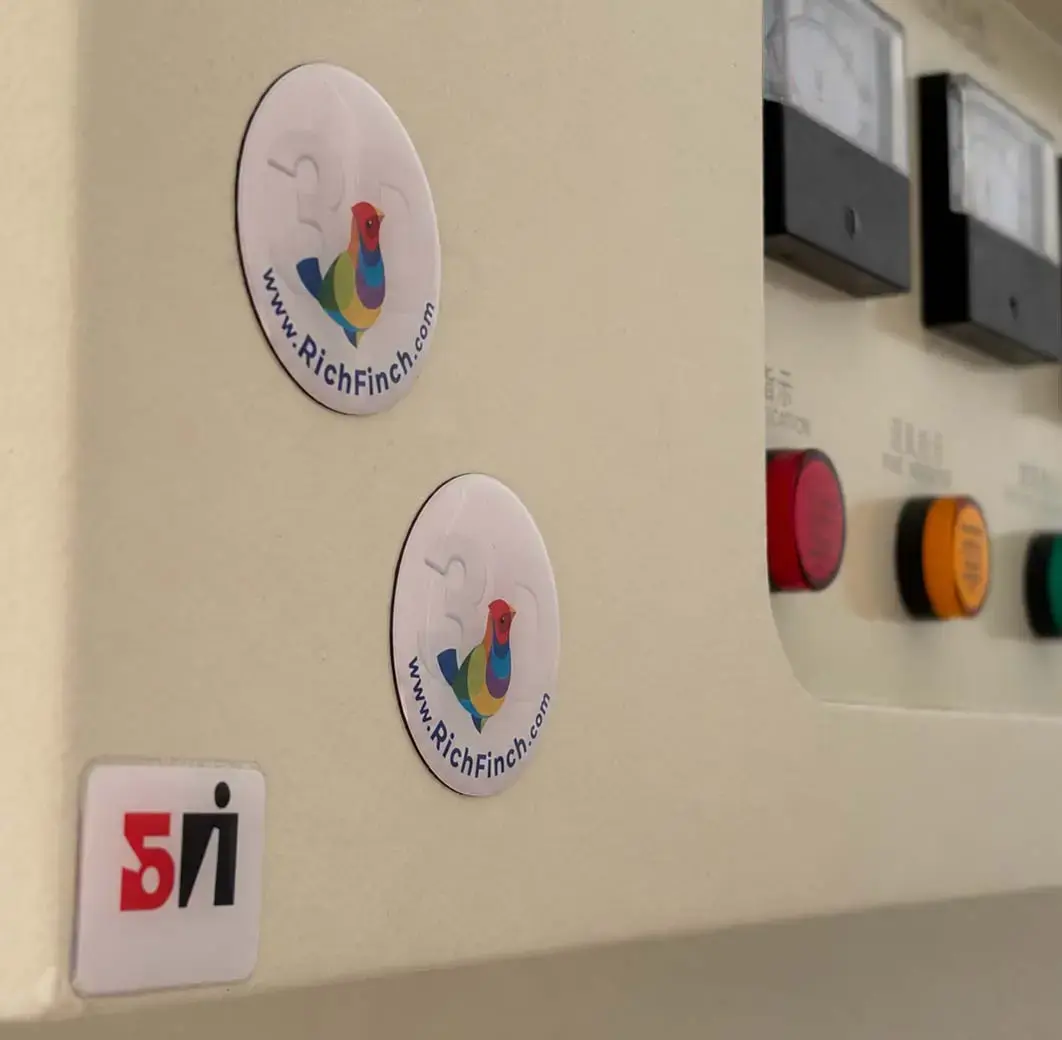
Who Buys Domed Labels
These are repeat industrial orders – the same label, batch after batch, for as long as the product is in production.
Equipment and machinery manufacturers
Control panel labels, model and specification labels, brand marks on housings. They have to stay readable in a workshop environment for the service life of the machine.
Appliance and electronics producers
Labels on housings and control surfaces, where a flat printed label looks cheap next to the product it is attached to and a domed one does not.
Consumer goods and packaging
Brand marks on containers, tools, sports equipment and durable goods – categories where the label is part of how the product is perceived on the shelf.
Label converters adding a premium line
Producers who already print and die-cut self-adhesive labels and want a higher-value product without changing what they print on.
How Domed Labels Are Produced on the Finch500
The label is printed and cut on the equipment you already have. Doming is the step that gets added.
Print the sheet
Labels are imposed on a self-adhesive sheet and printed as usual. Nothing about the artwork changes for doming.
Contour cut
Each label is cut along its outline with the backing left intact. The cut edge holds the resin in place at the border.
Dispense
The cut layout goes into the Finch500 software, which identifies every label on the sheet and calculates the resin volume for each. Metering and mixing happen inside the machine, so the dome on the last label of a run matches the first.
Cure
Sheets go into the heated curing oven, one sheet per tray, and come out as finished labels on a backing.
Why Domed Labels
Two reasons, and for industrial buyers the second one is usually the deciding one.
The label stops looking like a sticker
The clear dome adds depth and gloss and slightly magnifies the print underneath. On a machine housing or an appliance panel that reads as part of the product rather than as something applied to it afterwards.
It survives the environment it lives in
The cured polyurethane layer resists yellowing, clouding and discoloration under prolonged sun and weather exposure, and stands up to water, sea water, motor oil, industrial chemicals and scratches – the ordinary hazards of a workshop, a kitchen or a service bay – and holds from −30 °C to +60 °C. The dome takes the wear instead of the print.
Consistency across repeat orders
Resin is metered and mixed inside the machine rather than prepared by hand, so a label reordered next year comes out matching the one produced this year. For an industrial customer buying the same label for years, that matters more than any single production run.
Formats and Run Sizes
Production is organised by sheets, and every job starts from a cut layout.
Any die-cut shape the plotter can cut – round, rectangular, custom outlines.
One layout, many labels. Different labels for the same customer can share a sheet and be domed in one pass.
Repeat orders are saved jobs. The layout is prepared once and reused, which is how a recurring industrial order stays profitable.
Short runs are practical. Setup is measured in minutes, so a small batch of specification labels does not need a full production run to justify itself.
Domed Labels Produced on the Finch500
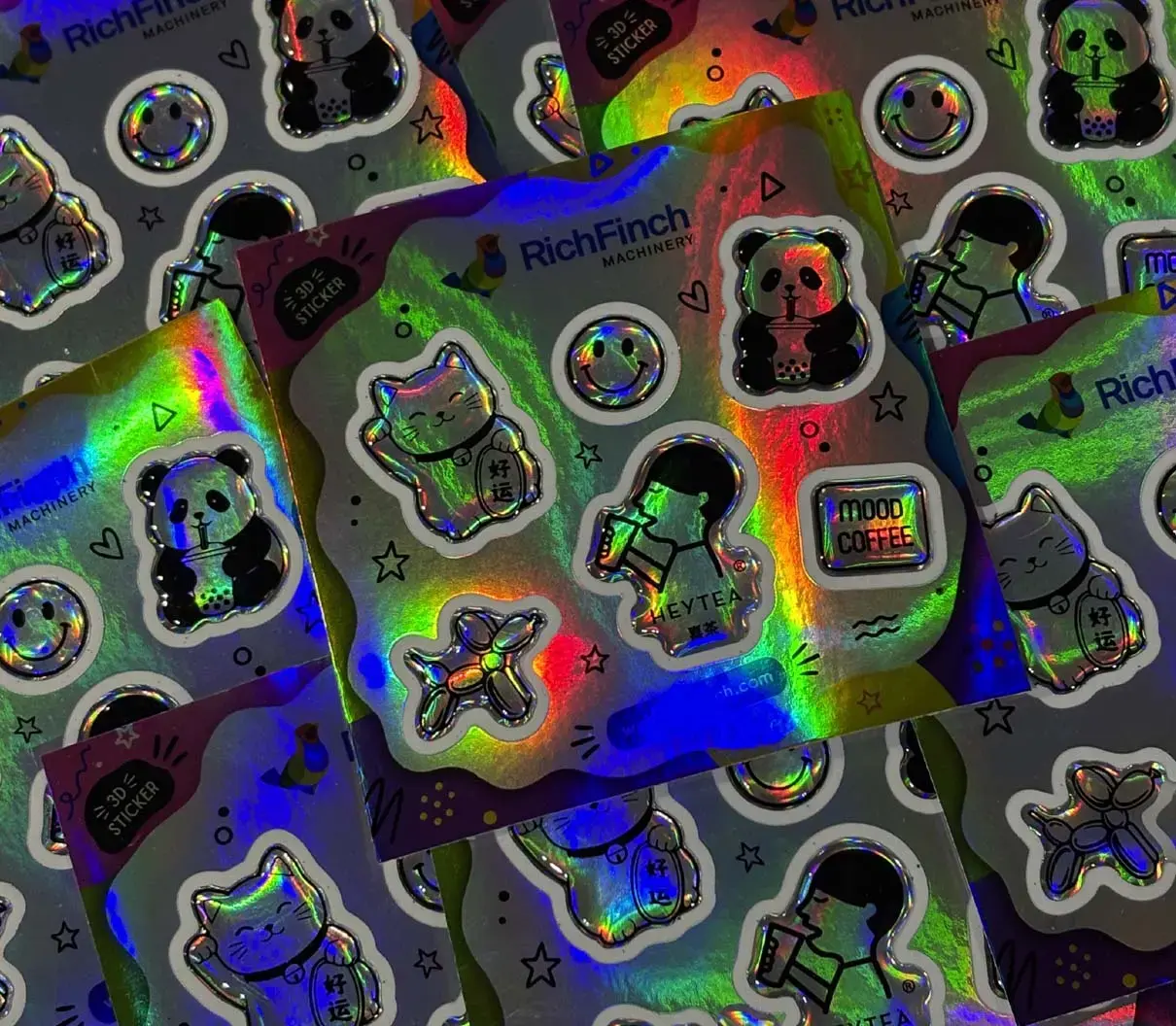
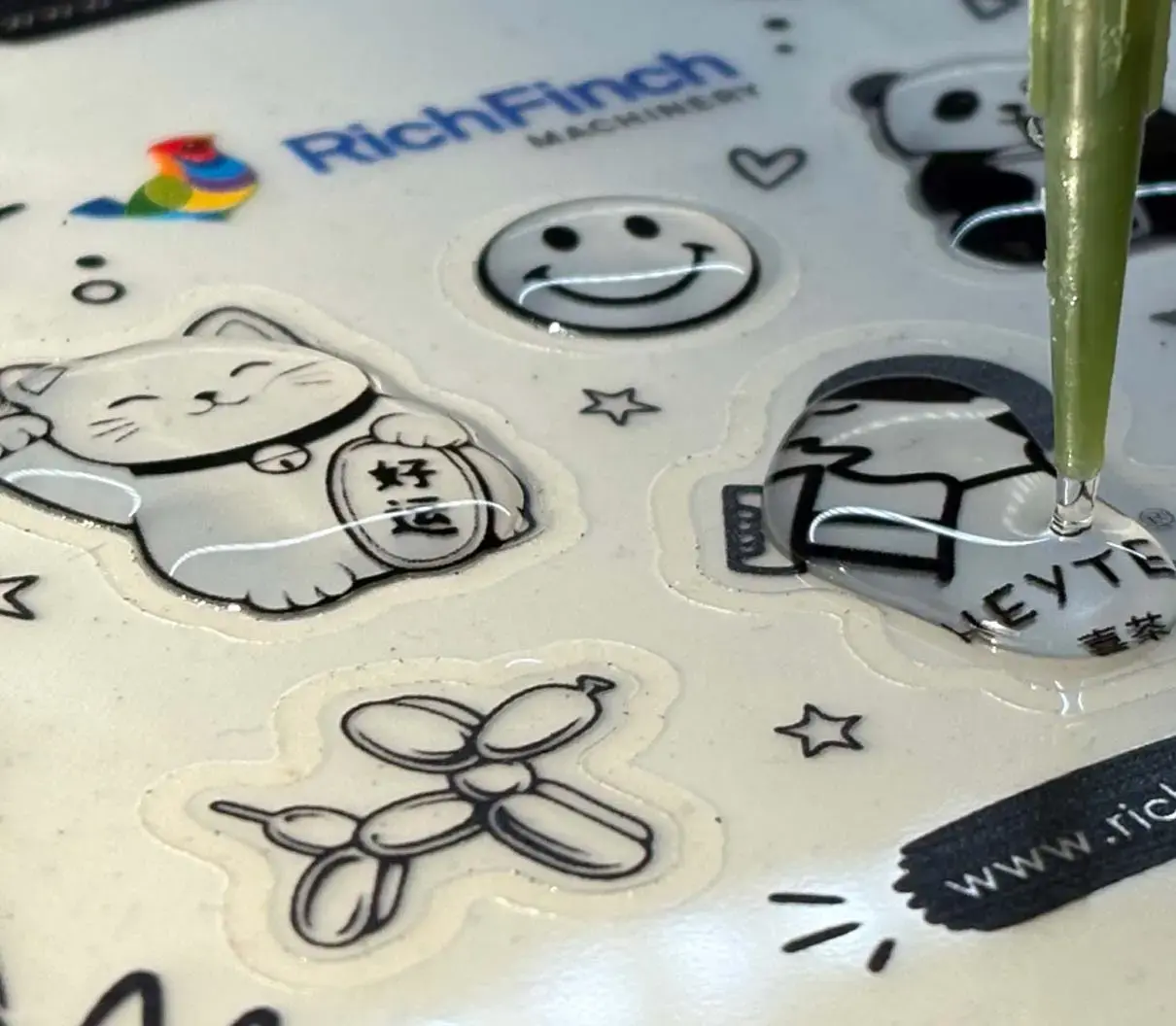
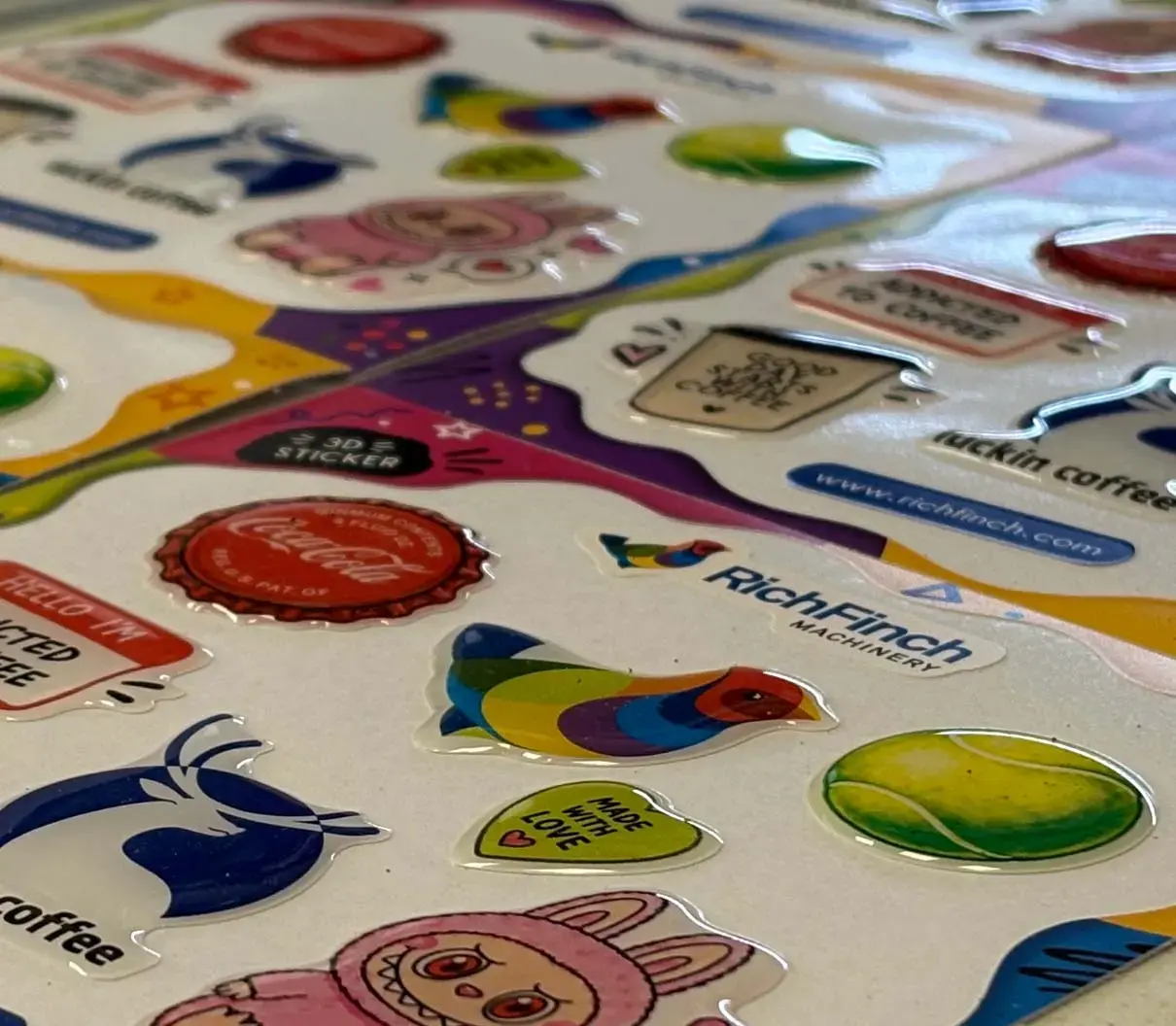
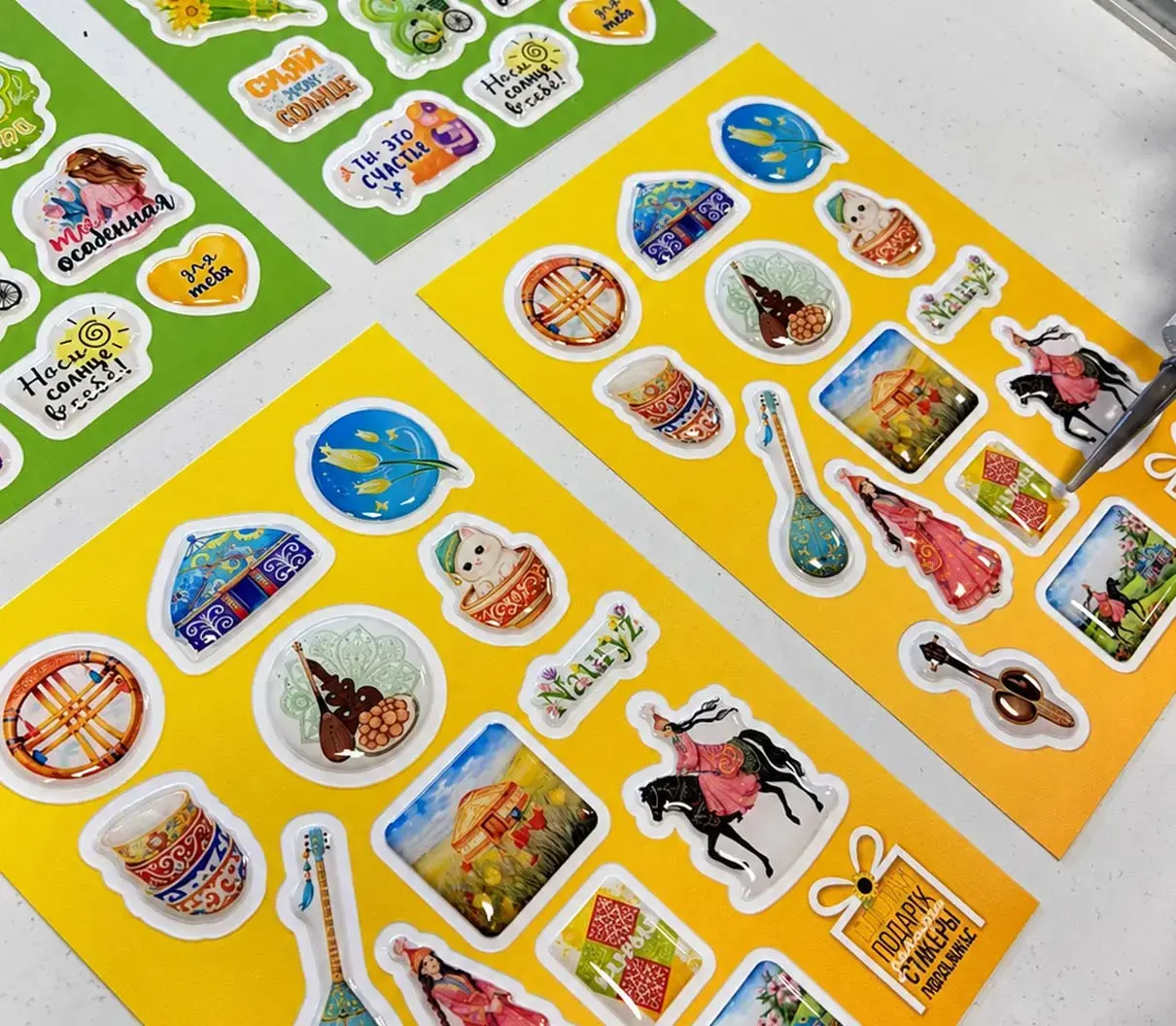
Add Domed Labels to Your Product Range
The Finch500 is a complete production system – machine, curing oven, software, polyurethane resin supply, operator training and support. Tell us what you plan to produce and we’ll respond within one business day.