
Automotive Decals & Stickers
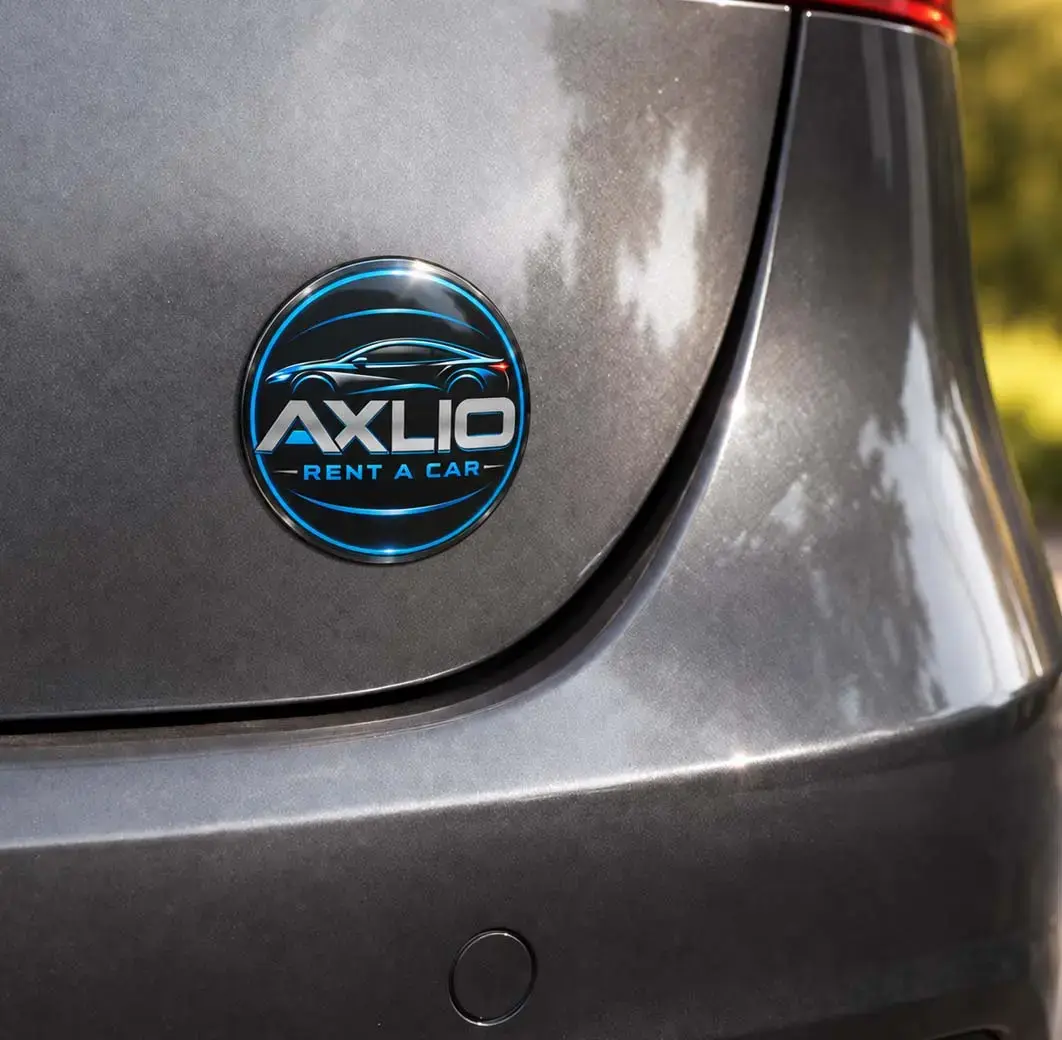
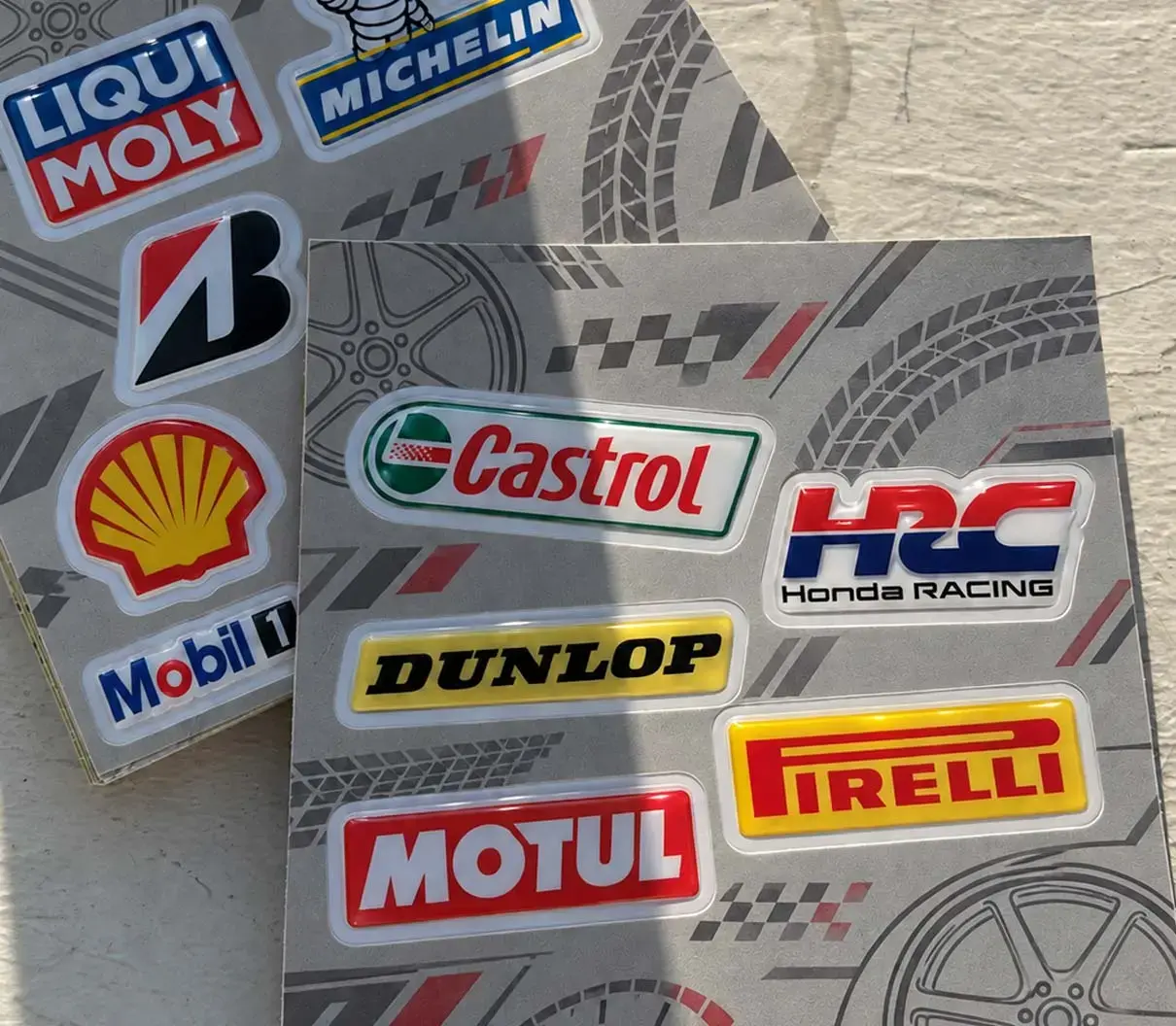
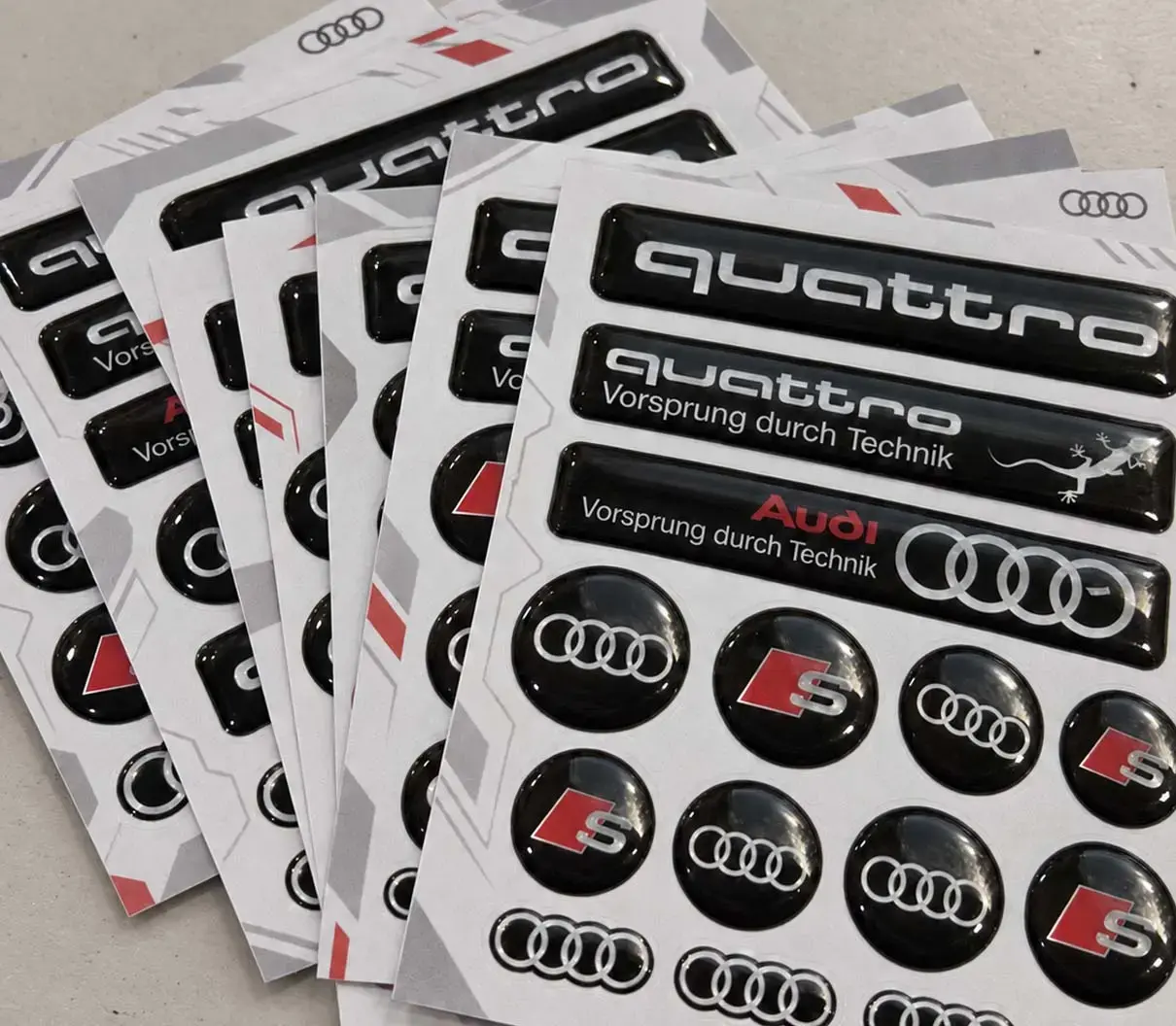
Domed decals are what dealerships, detailing studios and tuning shops order when a printed sticker is not good enough for a car. They are produced from printed self-adhesive sheets – printed, cut, domed and cured as complete sheets.
Who Buys Automotive Decals
Automotive buyers reorder – the same decal, every new vehicle, every new season.
Dealerships and service centres
Branded decals on delivered vehicles, service reminders, showroom and window graphics. The volume follows the number of cars that pass through.
Detailing and tuning studios
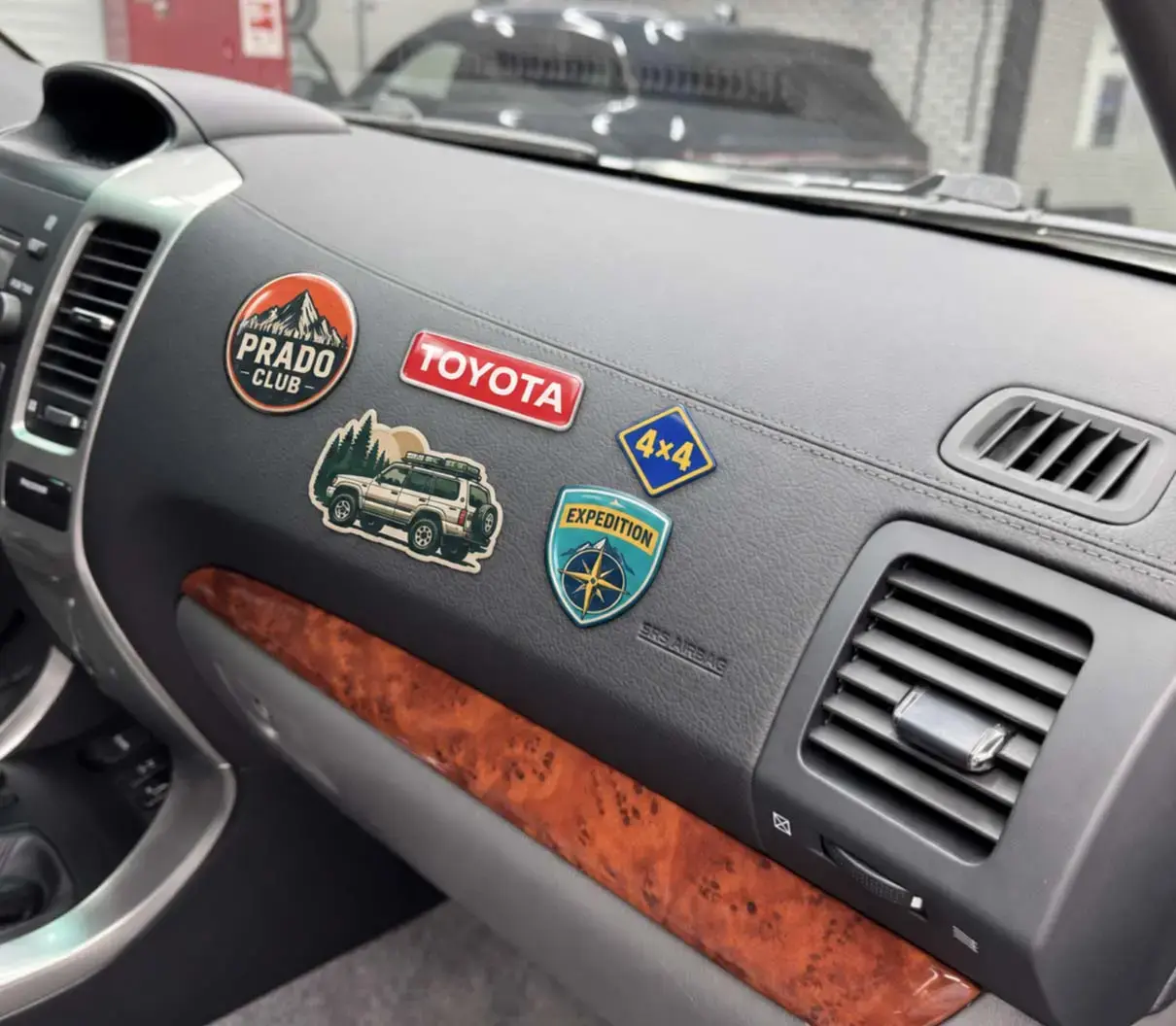
Studio marks on finished work, sponsor decals, club and event graphics. This customer cares about how the product looks next to fresh paint, which is exactly what doming addresses.
Fleet and commercial vehicle branding
Company marks on vans, trucks and service vehicles, ordered in batches and reordered as the fleet grows.
Car clubs, motorsport and events
Short runs, changing designs, hard deadlines – orders that only make sense if setup is fast.
How Automotive Decals Are Produced on the Finch500
The same four steps as any doming job. The car never touches the machine – the product is a sticker on a backing.
Print the sheet
Decals are imposed on a printed self-adhesive sheet, normally vinyl.
Contour cut
The plotter cuts each decal along its outline, backing intact. The cut edge holds the resin at the border of the shape.
Dispense
The cut layout goes into the Finch500 software, which recognises each decal and doses the resin per shape. A sheet of mixed sizes – small studio marks next to large logos – runs as one job.
Cure
Sheets cure in the heated curing oven on individual trays, then come out as finished decals ready to peel and apply.
Why Domed Decals for Vehicles
A car is a high-gloss object, and a flat printed sticker on it looks like a flat printed sticker.
The finish matches the car
The clear dome gives depth and a gloss that reads next to automotive paint rather than against it. That is why a dealership pays for a domed decal instead of a printed one.
It handles what a car goes through
The cured polyurethane layer resists yellowing, clouding and discoloration under prolonged sun and weather exposure, and stands up to water, sea water, motor oil, industrial chemicals and scratches – including car wash chemicals and the wear of routine cleaning. It holds from −30 °C to +60 °C. The dome takes it instead of the print.
It follows a curve
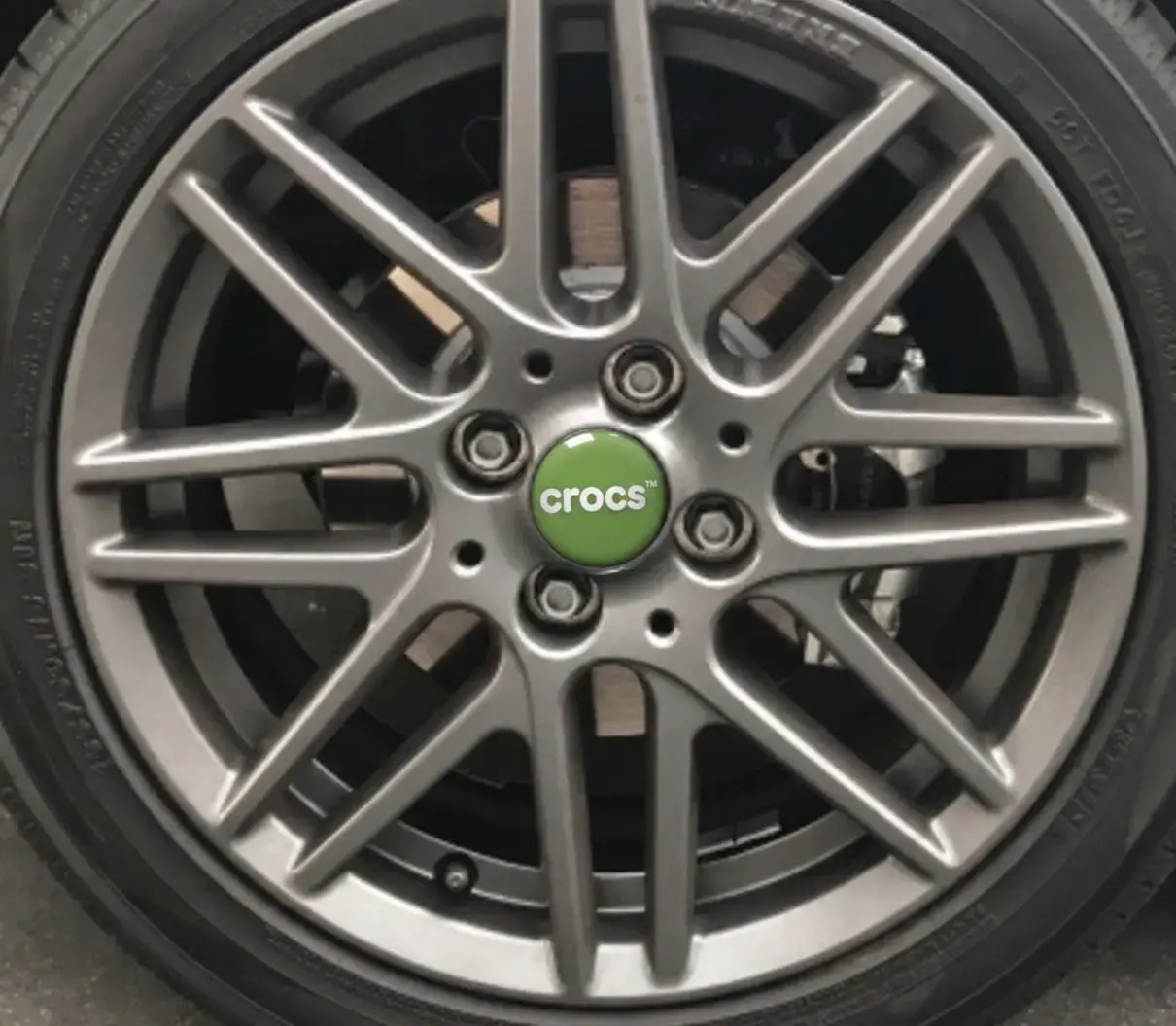
The cured dome flexes readily and conforms to noticeably curved panels, not only flat ones. Exact conformance still depends on the decal’s size and the curve it is going onto – test on the surface you actually produce for.
Formats and Run Sizes
Everything starts from a cut layout, and the sheet is the production unit.
Any die-cut shape the plotter can cut.
Mixed sizes in one job – a sheet can carry several decal formats at once.
Short runs are practical. Club, event and one-off studio orders are set up in minutes, not scheduled around a minimum run.
Repeat orders are saved jobs. Dealership and fleet decals get reordered against the same layout file.
Automotive Decals Produced on the Finch500
Add Automotive Decals to What You Produce
The Finch500 is a complete production system – machine, curing oven, software, polyurethane resin supply, operator training and support. Tell us what you plan to produce and we’ll respond within one business day.